Compare Meta Quest 3 vs Meta Rift S
In this technical comparison between the Meta Quest 3 and the Meta Rift S, we analyze the key features to help you choose.
The display is a highlight, featuring a resolution of 2064 × 2208 per eye for the Quest 3 versus 2560×1440 total (1280×1440 per eye) for the Rift S.
Choosing between these two VR Headsets models often comes down to your budget, with prices around 500 USD and $399 (at launch).
| Specifications |
Meta Quest 3 |
Meta Rift S |
|---|---|---|
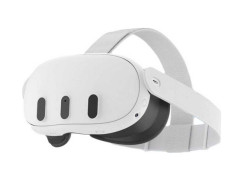
|
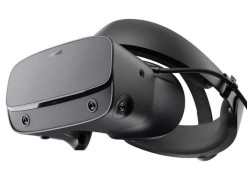
|
|
| Launch | ||
| Release Version | October, 2023 | May 2019 |
| Display | ||
| Sensor Technology | LCD (Infinite Display) | Single Fast-Switch LCD (RGB Stripe) |
| Image Resolution | 2064 × 2208 per eye | 2560×1440 total (1280×1440 per eye) |
| Refresh rate | 90 Hz / 120 Hz supported | 80Hz |
| Field of view | ~110° horizontal / ~96° vertical | ~115° |
| Brightness | - | Standard SDR (Not officially rated for high-peak nits) |
| HDR | No | Not supported |
| Optics | ||
| Lens type | Pancake lenses | 2nd Generation Fresnel Lenses (Reduced god rays) |
| IPD adjustment | Continuous 53–75 mm | Software-only (Fixed lens distance at 63.5mm) |
| Eye relief | Yes (lens depth adjustment) | Adjustable via a button on the bottom of the headset (Slides the visor forward/back) |
| Tracking & Input | ||
| Tracking type | Inside-out (6 DoF) | Oculus Insight (6DOF Inside-out tracking) |
| Controller tracking | Yes (IR + SLAM tracking) | 5 Integrated cameras on the headset |
| Hand tracking | Yes | No |
| Eye tracking | No | No |
| Facial tracking | No | No |
| Performance | ||
| Processor / Chipset | Qualcomm Snapdragon XR2 Gen 2 | None (PC-powered) |
| RAM | 8 GB | Dependent on PC (Minimum 8GB recommended) |
| Storage | 128 GB / 512 GB | None (Games are stored on the connected PC) |
| Mixed Reality Features | ||
| Passthrough | Full-color stereo passthrough | Passthrough+ (Monoscopic, Black & White) |
| Depth sensing | Yes (depth sensor + scene understanding) | Software-based (Using camera parallax) |
| Audio | ||
| Built-in audio | Yes (spatial speakers) | Integrated directional speakers (located in the headband) |
| 3.5mm jack | Yes | Yes |
| Mic | Yes (4-mic array) | Integrated dual-microphone array |
| Connectivity | ||
| Wired | USB-C (Link mode) | 5-meter tethered cable (DisplayPort 1.2 and USB 3.0) |
| Wireless | Wi-Fi 6E | No |
| Bluetooth | Bluetooth 5.2 | No |
| PCVR support | Yes (Wired Link + Air Link + Virtual Desktop) | Native (Primary mode) |
| Compatibility | ||
| Platforms | Standalone / PCVR | Oculus Home, SteamVR, Viveport |
| Supported OS | Meta OS (Android-based), Windows for PCVR | Windows |
| Comfort | ||
| Weight | ~515 g (without strap) | 500g (Approx. 1.1 lbs) |
| Strap type | Soft strap (optional Elite strap) | Halo Headband with rear tension dial (Lenovo design) |
| Face interface | Replaceable facial interface | Replaceable foam gasket |
| Battery | ||
| Battery life | ~2–3 hours usage | N/A (Headset is powered via USB) |
| Charging method | USB-C charging / dock support (optional) | No |
| External battery support | Yes (strap-mounted power pack) | Not required; controllers use 1x AA battery each |
| Misc | ||
| Inside the box | Headset + 2 Touch Plus controllers + cables | Rift S Headset, 2x Touch Controllers, Headset Cable (5m), Mini DisplayPort to DisplayPort adapter, 2x AA batteries |
| Price | 500 USD | $399 (at launch) |
| Full Details | Quest 3 - Full Specifications | Rift S - Full Specifications |