Comparaison Honor Magic V3 vs Samsung Galaxy Z Fold7
Dans ce comparatif technique entre le Honor Magic V3 et le Samsung Galaxy Z Fold7, nous analysons les points clés pour vous aider à choisir.
L'affichage est un point fort, avec une résolution de 2156 x 2344 pixels (~402 ppi) pour le Magic V3 face aux 1968 x 2184 pixels (~368 ppi) du Galaxy Z Fold7.
Le choix entre ces deux modèles de la catégorie Téléphones pliables dépendra souvent de votre budget, avec des prix avoisinant ~$1,999 et Starting at ~$1,899 / 1,900€ (Lancement price).
| Spécifications |
Honor Magic V3 |
Samsung Galaxy Z Fold7 |
|---|---|---|
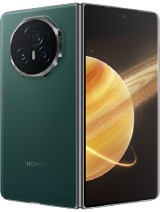
|
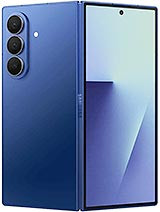
|
|
| Lancement | ||
| Version | Juillet 2024 | Juillet 2025 |
| Réseau | ||
| Technologie | GSM / HSPA / LTE / 5G | GSM / HSPA / LTE / 5G |
| SIM | Double Nano-SIM (Double veille) ou Nano-SIM + eSIM | Nano-SIM et eSIM ou Double Nano-SIM |
| Body | ||
| Dimensions | Dépliée: 156.6 x 145.3 x 4.35 mm Plié: 156.6 x 74.0 x 9.2 mm | Plié: 158.4 x 72.8 x 8.9 mm / Dépliée: 158.4 x 143.2 x 4.2 mm |
| Poids | 226g (Leather back) / 230g (Dos en verre) | 215 g |
| Matériaux de fabrication | Qualité aérospatiale fiber / Dos en verre, Alliage d’aluminium frame, titanium hinge | Grade 4 Titanium Lattice frame, Gorilla Glass Ceramic 2 (back), Armor FlexHinge |
| Indice de protection (IP) | IPX8 Résistant à l’eau (Jusqu’à 2.5m pour 30 mins) | IP48 |
| Divers | Super charnière en acier, thinnest foldable at Lancement | 10% stronger frame vs predecessor; significantly thinner multi-rail hinge |
| Affichage | ||
| Type | Inner: Foldable LTPO OLED, 1B couleurs | Foldable Dynamic LTPO AMOLED 2X |
| Taille | 7.92 inches (~88.6% Ratio écran-corps) | 8.0 inches (Principal) |
| Résolution | 2156 x 2344 pixels (~402 ppi) | 1968 x 2184 pixels (~368 ppi) |
| Taux de rafraîchissement | 120Hz (LTPO) | 120Hz (Adaptive 1-120Hz) |
| Support HDR | HDR10+, Dolby Vision | HDR10+ |
| Protection | Écran interne Super Armored | PET screen protector (Inner); Gorilla Glass Ceramic 2 (Housse de protection) |
| Écran externe | 6.43" LTPO OLED, 1060 x 2376 px, 5000 nits (peak), NanoCrystal Bouclier 2.0 | 6.5 inches, Dynamic AMOLED 2X, 1080 x 2520 px, 21:9 aspect ratio |
| Divers | - | 2,600 nits de luminosité de crête; Vision Booster support |
| Platform | ||
| Système d'exploitation | Android 14, MagicOS 8.0.1 | Android 16, One UI 8.0 (Upgradable to One UI 8.5) |
| Puce | Qualcomm Snapdragon 8 Gen 3 (4 nm) | Qualcomm Snapdragon 8 Elite pour Galaxy (3 nm) |
| Processeur (CPU) | Octa-core (1x3.3 GHz Cortex-X4 & 3x3.2 GHz & 2x3.0 GHz & 2x2.3 GHz) | Octa-core (2x4.47 GHz Oryon V2 Phoenix L + 6x3.53 GHz Oryon V2 Phoenix M) |
| Processeur graphique (GPU) | Adreno 750 | Adreno 830 (1200 MHz) |
| Fonctionnalités logicielles | Affichage AI Defocus, Magic Portal, Parallel Space, Circle to Search | Galaxy AI (multimodal), Circle to Search, Traduction instantanée, One UI 8 multitasking |
| Mémoire vive (RAM) | ||
| Emplacement carte mémoire | Non | Non |
| Stockage interne | 256GB / 512GB / 1TB (UFS 4.0) | 256GB / 512GB / 1TB (UFS 4.0) |
| Mémoire RAM | 12GB / 16GB (LPDDR5X) | 12GB (standard); 16GB (exclusive to 1TB model) |
| Appareil photo principal | ||
| Grand-angle (principal) | 50 MP, f/1.6, 1/1.56", PDAF, OIS | 200 MP, f/1.7, 24mm, 1/1.3", OIS, PDAF multidirectionnel |
| Ultra grand-angle | 40 MP, f/2.2, 112°, AF (Prend en charge macro) | 12 MP, f/2.2, 120˚, 1.4µm, PDAF Dual Pixel (Prend en charge Macro) |
| Téléobjectif / Périscope | 50 MP, f/3.0, Périscopique, 3.5x zoom optique, OIS, 100x zoom numérique | 10 MP, f/2.4, 67mm, PDAF, OIS, 3x zoom optique |
| OIS | Oui (Principal et Téléobjectif) | Oui (Principal et Téléobjectif) |
| Enregistrement vidéo | 4K@30/60fps (10-bit), 1080p@30/60fps, gyro-EIS | 8K@30fps, 4K@60fps, 1080p@240fps (gyro-EIS), 10-bit HDR |
| Appareil photo frontal | ||
| Caméra selfie interne | 20 MP, f/2.2, 90° (Les deux screens) | 10 MP, f/2.2 (Sous l’écran / Hole-punch) |
| Caméra selfie externe | HDR, Portrait mode, Gesture control | 10 MP, f/2.2, 24mm |
| Fonctionnalités selfie | - | HDR, ProVisual Engine AI processing |
| Vidéo selfie | 4K@30fps, 1080p@30fps | 4K@30/60fps, 1080p@30/60fps (gyro-EIS) |
| Audio / Son | ||
| Haut-parleurs | Oui, avec Haut-parleurs stéréo | Oui, avec Haut-parleurs stéréo |
| Stereo speakers | Oui | - |
| Prise jack 3.5mm | Non | Non |
| Caractéristiques audio | 24-bit/192kHz Hi-Res audio, DTS:X Ultra | 32-bit/384kHz audio, optimisé par AKG |
| Connectivité | ||
| Wi-Fi / WLAN | Wi-Fi 802.11 a/b/g/n/ac/6e/7, Double bande, Wi-Fi Direct | Wi-Fi 802.11 a/b/g/n/ac/6e/7, tri-band |
| Géolocalisation (GPS) | GPS (L1+L5), GLONASS, BDS, GALILEO, QZSS | GPS, GLONASS, GALILEO, BDS, QZSS |
| NFC | - | Oui |
| Infrarouge | Oui | Non |
| Radio FM | - | Non |
| USB | USB Type-C 3.1, OTG, DisplayPort 1.2 | USB Type-C 3.2, OTG |
| Fonctionnalités | ||
| Capteurs | Accéléromètre, Gyro, Proximité, Boussole, Baromètre | Empreinte digitale (Monté sur le côté), Accéléromètre, gyro, Proximité, Boussole, Baromètre |
| Lecteur d’empreintes | Monté sur le côté | Oui |
| Support du stylet | Oui (Les deux inner et outer screens) | Oui (S Pen Fold Edition) |
| Ultra Wideband (UWB) | - | Oui (Ultra Wideband support) |
| Fonctionnalités spéciales | - | Samsung DeX, Samsung Pay, Foreign substance folding alert |
| Batterie | ||
| Type / Capacité de la batterie | 5150 mAh (Silicon-Carbon) | 4400 mAh (Dual Batterie system) |
| Charge filaire | 66W SuperCharge | 25W (50% in 30 min) |
| Charge sans fil | 50W Sans fil SuperCharge | 15W |
| Reverse charging | 5W Charge filaire inversée | - |
| Charge sans fil inversée | - | 4.5W |
| Divers | ||
| Couleurs disponibles | Velvet noir, Tundra Vert, Snow (blanc), Reddish Brown (Silk Road Dunhuang) | Silver Shadow, bleu Shadow, Jetblack, Mint (Online Exclusive) |
| Contenu de la boîte | Phone, 66W Chargeur, USB-C Cable, PU Coque de protection, Eject Tool | - |
| Prix | ~$1,999 | Starting at ~$1,899 / 1,900€ (Lancement price) |
| Full Details | Magic V3 - Fiche technique complète | Galaxy Z Fold7 - Fiche technique complète |