Vergleich Meta Quest 3 vs Sony PlayStation VR
In diesem technischen Vergleich zwischen dem Meta Quest 3 und dem Sony PlayStation VR analysieren wir die wichtigsten Punkte, um Ihnen bei der Entscheidung zu helfen.
Das Display ist ein Highlight mit einer Auflösung von 2064 × 2208 pro Auge beim Quest 3 im Vergleich zu 1920 × 1080 gesamt (960 × 1080 pro Auge) beim PlayStation VR.
Die Wahl zwischen diesen beiden Modellen der Kategorie VR-Headsets hängt oft von Ihrem Budget ab, bei Preisen um 500 USD und $399 (at Markteinführung, headset nur).
| Spezifikationen |
Meta Quest 3 |
Sony PlayStation VR |
|---|---|---|
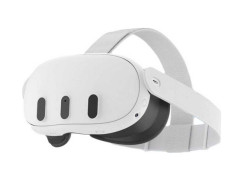
|
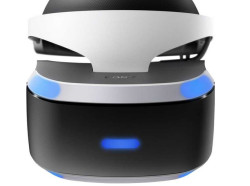
|
|
| Markteinführung | ||
| Version | Oktober, 2023 | Oktober 2016 |
| Display | ||
| Typ | LCD (Infinite-Display) | Single 5.7" OLED |
| Auflösung | 2064 × 2208 pro Auge | 1920 × 1080 gesamt (960 × 1080 pro Auge) |
| Bildwiederholrate | 90 Hz / 120 Hz Unterstützt | 90Hz, 120Hz |
| Sichtfeld (FOV) | ~110° Horizontal / ~96° vertical | ca. 100° |
| Helligkeit | - | Hoch (OLED) |
| HDR | Nein | Headset unterstützt nicht HDR; however, the CUH-ZVR2 Processor Unit Unterstützt HDR Passthrough to the TV. |
| Optik | ||
| Linsentyp | Pancake-Linsen | Aspherical (Non-Fresnel, significantly reducing "god rays") |
| IPD-Einstellung (Pupillenabstand) | Continuous 53–75 mm | Software-nur (via PlayStation Settings) |
| Augenabstand | Ja (Linsentiefenverstellung) | Ja (A button on the bottom allows the visor to slide forward/back) |
| Tracking & Eingabe | ||
| Tracking-Typ | Inside-out (Tracking) (6 DoF) | Outside-in (Visible light tracking via 9 LEDs on the headset) |
| Controller-Tracking | Ja (IR + SLAM tracking) | Tracked by the PlayStation Camera (erforderlich) |
| Hand-Tracking | Ja | Nein |
| Eye-Tracking | Nein | Nein |
| Gesichts-Tracking | Nein | Nein |
| Leistung | ||
| Prozessor / Chipsatz | Qualcomm Snapdragon XR2 Gen 2 | External Processor Unit (handles 3D audio und Social Screen output) |
| Arbeitsspeicher (RAM) | 8 GB | Dependent on Console (PS4/PS5) |
| Speicher | 128 GB / 512 GB | None (Stored on Console) |
| Mixed-Reality-Funktionen | ||
| Passthrough (Transparenz) | Vollfarbig stereo Passthrough | None (Hardware does not have Vorne-facing cameras) |
| Tiefensensorik | Ja (Tiefensensor + Raumverständnis) | Handled by the external PlayStation Camera |
| Audio | ||
| Integriertes Audio | Ja (räumliche Lautsprecher) | Integriert Microphone (ZVR2 model adds Integriert earbuds) |
| 3,5-mm-Klinke | Ja | Ja |
| Mikrofon | Ja (4-mic array) | Ja |
| Konnektivität | ||
| Kabelgebunden | USB-C (Link mode) | HDMI, USB, und proprietary AUX (via Processor Unit) |
| Drahtlos | Wi-Fi 6E | Nein |
| Bluetooth | Bluetooth 5.2 | Nein |
| PCVR-Unterstützung | Ja (Wired Link + Air Link + Virtual Desktop) | Not officially Unterstützt |
| Kompatibilität | ||
| Plattformen | Standalone / PCVR | PlayStation 4, PlayStation 4 Pro, PlayStation 5 |
| Unterstützte Betriebssysteme | Meta OS (Android-based), Windows für PCVR | PlayStation System Software (PS5 Erfordert a Camera Adapter) |
| Komfort | ||
| Gewicht | ~515 g (without strap) | ~610g (excluding cable) |
| Kopfgurt-Typ | Soft strap (optional Elite strap) | Halo-style headband mit Heck / Hinten dial und quick-release button |
| Gesichtspolster / Interface | Austauschbares Face-Interface | Rubber/Silicone Lichtschutz (easily removable und washable) |
| Akku | ||
| Akkulaufzeit | ~2–3 Stunden Nutzungsdauer | N/A (Headset is wired); Move controllers last ~10 Stunden |
| Lademethode | USB-C charging / Docking-Unterstützung (optional) | N/A (Headset); Mini-USB oder Micro-USB für controllers |
| Unterstützung für externe Akkus | Ja (Akku am Kopfband) | Nein |
| Verschiedenes | ||
| Lieferumfang | Headset + 2 Touch Plus controllers + cables | VR Headset, Processor Unit, Connection cable, HDMI-Kabel, USB cable, Stereo-Kopfhörer, AC Netzkabel/adapter |
| Preis | 500 USD | $399 (at Markteinführung, headset nur) |
| Full Details | Quest 3 - Vollständiges Datenblatt | PlayStation VR - Vollständiges Datenblatt |