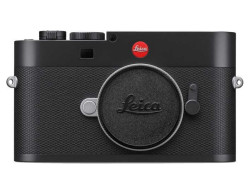
Vergleich Leica M EV1 vs OM System OM-1 Mark II
In diesem technischen Vergleich zwischen dem Leica M EV1 und dem OM System OM-1 Mark II analysieren wir die wichtigsten Punkte, um Ihnen bei der Entscheidung zu helfen.
Die Wahl zwischen diesen beiden Modellen der Kategorie Kameras hängt oft von Ihrem Budget ab, bei Preisen um $8,995 USD / €7,950 und $2,399 / £2,199.
| Spezifikationen |
Leica M EV1 |
OM System OM-1 Mark II |
|---|---|---|
|

|
|
| Markteinführung | ||
| Version | Oktober 2025 | Januar 2024 |
| Body | ||
| Abmessungen | 139 x 80 x 38 mm | 134.8 x 91.6 x 72.7 mm |
| Gewicht | ca. 484g (mit Akku); the lightest digital M to date. | ca. 599g (mit Akku und card); 511g (nur Gehäuse) |
| Objektivanschluss | Leica M Bayonet (mit 6-bit encoding Sensor) | Micro Four Thirds |
| Wetterschutz / Abdichtung | Partially sealed (staub- und feuchtigkeitsresistent magnesium & aluminum construction) | IP53 rated (Superior protection against dust und splashes); Freezeproof to -10°C |
| Sensor | ||
| Typ | BSI CMOS (Triple Auflösung Technology) | Stacked BSI Live MOS |
| Größe | Vollformat (36 x 24 mm) | Four Thirds (17.4 x 13.0 mm) |
| Auflösung | 60.3 MP (Selectable at 60MP, 36MP, oder 18MP) | 20.4 Megapixel |
| ISO-Bereich | 64 - 50,000 | 200–25,600 (Extended: 80–102,400) |
| Bildstabilisierung | None (Traditional M approach; basiert auf lens/shutter Geschwindigkeit) | 5-axis In-body (IBIS) bis zu 8.5 stops (World-leading compensation) |
| Display & Sucher | ||
| Rückseitiges Display | 2.95-inch TFT LCD (2.33 million Bildpunkte) mit Gorilla Glass und touch control | 3.0-inch vollständig Articulated Touch LCD; 1.62M Bildpunkte |
| Sucher | Integriert 5.76M-dot OLED EVF; 0.76x Vergrößerung; 60fps Bildwiederholrate | 5.76M-dot OLED EVF; 0.83x Vergrößerung; 120fps refresh; Blackout-frei |
| Autofokus | ||
| AF-Punkte | - | 1,053 points (alles Kreuzsensoren) |
| AF-System | - | Cross Quad Pixel Phasenerkennung AF |
| Augen-AF | - | Ja (Mensch, Tier, Vogel, Auto, Zug, Airplane, und Motorrad detection; significantly improved over the Mark I) |
| Foto | ||
| Serienaufnahme | 4.5 fps (Hoch Geschwindigkeit) / 3 fps (Low Geschwindigkeit) | 10 fps (Mechanisch); bis zu 120 fps (Electronic S-AF); 50 fps (Electronic C-AF) |
| Formate | DNG (RAW, 14-bit), JPEG (8-bit) | RAW (now Unterstützt 14-bit in Hoch-Res modes), JPEG --- Computational Modes: Live GND (Graduated ND), Live ND (bis zu ND128), 80MP Stativ Hoch-Res, 50MP Handheld Hoch-Res |
| Video | ||
| Max. Auflösung & FPS | - | 4K (DCI/UHD) bis zu 60p; Full HD bis zu 240p |
| Farbtiefe (Bit) | - | 10-bit internal (H.265); 12-bit RAW Ausgabe über HDMI |
| Mikrofon- / Kopfhöreranschlüsse | - | 3.5mm Mikrofonanschluss / 3.5mm Kopfhöreranschluss |
| HDMI-Ausgang | - | Micro-HDMI (Type D) |
| Speicher | ||
| Kartenslots | einzelner Slot + Internal Memory | Doppel-Slot |
| Typ | SD/SDHC/SDXC (UHS-II) + 64GB interner Speicher | Beide slots sind SD/SDHC/SDXC (UHS-II) |
| Konnektivität | ||
| Wi-Fi | 2.4GHz / 5GHz Dual-Band | Ja |
| Bluetooth | Bluetooth 5.0 LE (Unterstützt Leica FOTOS app) | Ja |
| USB / HDMI | USB-C 3.1 Gen 1 (Charging & Data) / Nein HDMI | USB-C (Unterstützt Leistung Delivery und UVC/UAC webcam mode natively) |
| Akku | ||
| Modell | BP-SCL7 | BLX-1 |
| Akkulaufzeit (CIPA) | ca. 240 Aufnahmen (standard use of EVF/LCD) | ca. 500 Aufnahmen (Normal) / 1,010 Aufnahmen (Quick Ruhemodus) |
| Laden über USB | Unterstützt via USB-C | Ja (USB-PD Unterstützt) |
| Verschiedenes | ||
| Lieferumfang | Leica M EV1 Body, BP-SCL7 Akku, Leather Strap, USB-C Cable, Gehäusedeckel. | Kameragehäuse, BLX-1 Akku, USB-Netzadapter (F-7AC), USB cable, Schultergurt, Cable clip |
| Preis | $8,995 USD / €7,950 | $2,399 / £2,199 |
| Full Details | M EV1 - Vollständiges Datenblatt | OM-1 Mark II - Vollständiges Datenblatt |