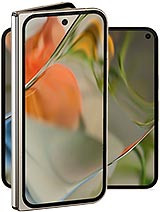
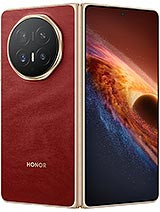
Vergleich Google Pixel 9 Pro Fold vs Honor Magic V6
In diesem technischen Vergleich zwischen dem Google Pixel 9 Pro Fold und dem Honor Magic V6 analysieren wir die wichtigsten Punkte, um Ihnen bei der Entscheidung zu helfen.
Das Display ist ein Highlight mit einer Auflösung von 2076 x 2152 pixels beim Pixel 9 Pro Fold im Vergleich zu 2352 x 2172 px (Haupt) | 2420 x 1080 px (Abdeckung) beim Magic V6.
Die Wahl zwischen diesen beiden Modellen der Kategorie Faltbare Smartphones hängt oft von Ihrem Budget ab, bei Preisen um $1,799 und ca. $1,499.
| Spezifikationen |
Google Pixel 9 Pro Fold |
Honor Magic V6 |
|---|---|---|
|
|
|
| Markteinführung | ||
| Version | September 2024 | März 2026 |
| Netzwerk | ||
| Technologie | GSM / HSPA / LTE / 5G | GSM / CDMA / HSPA / LTE / 5G |
| SIM | Nano-SIM und eSIM | Dual-Nano-SIM (Global); Optional Duale eSIM-Unterstützung (max 2 active) |
| Body | ||
| Abmessungen | Aufgeklappt: 155.2 x 150.2 x 5.1 mm Zusammengeklappt: 155.2 x 77.1 x 10.5 mm | Zusammengeklappt: 156.7 x 74.5 x 8.75 mm | Aufgeklappt: 156.7 x 145.6 x 4.0 mm |
| Gewicht | 257g | ~219g |
| Gehäusematerialien | Gorilla Glass Victus 2 (Vorne/back), Satin metal frame, Luft- und Raumfahrtqualität Aluminiumlegierung hinge | Scharnier in Luft- und Raumfahrtqualität, spezialisiertes UTG (Ultra Dünnglas), individuell kratzfest Abdeckung panel |
| IP-Zertifizierung (Wasser-/Staubschutz) | IPX8 Wasserbeständig | IP68 und IP69 (Hochdruck Wasserstrahl resistance) |
| Sonstiges | - | Ultraschlankes Profil; lässt sich falten/aufklappen Unterwasser-Unterstützung |
| Display | ||
| Typ | Inner: Super Actua Flex (LTPO OLED) | Foldable LTPO2 AMOLED, 1B Farben, 4320Hz PWM Dimmen |
| Größe | 8.0 inches (~89% Display-Gehäuse-Verhältnis) | 7.95-inch (Haupt) | 6.52-inch (Abdeckung) |
| Auflösung | 2076 x 2152 pixels | 2352 x 2172 px (Haupt) | 2420 x 1080 px (Abdeckung) |
| Bildwiederholrate | 1–120Hz | 120Hz (Beide) |
| HDR-Unterstützung | HDR10+, Ultra HDR, 2700 nits (peak brightness) | HDR10+ / Dolby Vision |
| Schutz (Display/Glas) | Ultra Dünnglas | Honor NanoCrystal Schild 3.0 / UTG |
| Cover-Display (Außendisplay) | 6.3" Actua Display (OLED), 1080 x 2424 px, 60–120Hz, Gorilla Glass Victus 2 | 5000 Nits Spitzenhelligkeit; 21:9 aspect ratio |
| Verschiedenes | - | Always-On-Display; Eingabestift-Unterstützung auf beiden Bildschirmen |
| Platform | ||
| Betriebssystem | Android 14 (Upgradable to Android 15/16), 7 Jahre of Aktualisierungen | MagicOS 10 based on Android 16 (Promise of 7 wichtige Upgrades) |
| Chipsatz (Prozessor) | Google Tensor G4 (4 nm) | Qualcomm Snapdragon 8 Elite Gen 5 (3 nm) |
| Prozessor (CPU) | Octa-core (1x3.1 GHz Cortex-X4 & 3x2.6 GHz Cortex-A720 & 4x1.92 GHz Cortex-A520) | Octa-core (2x4.6 GHz Oryon V3 Phoenix L + 6x3.62 GHz Oryon V3 Phoenix M) |
| Grafikprozessor (GPU) | Mali-G715 MC7 | Adreno 840 |
| Software-Funktionen | Gemini Nano (on-device AI), Magic Editor, Add Me, Pixel Studio, Satellite SOS | Advanced AI multitasking, "Robot Phone" interaction features, Satellitenkonnektivität (specific variants) |
| Arbeitsspeicher (RAM) | ||
| Speicherkartenslot | Nein | Nein |
| Interner Speicher | 256GB / 512GB (UFS 3.1) | 512GB / 1TB (UFS 4.1) |
| Arbeitsspeicher (RAM) | 16GB (LPDDR5X) | 16GB LPDDR6 |
| Hauptkamera | ||
| Weitwinkel (Hauptlinse) | 48 MP, f/1.7, 25mm, 1/2.0", Quad PD, OIS | 50 MP, f/1.6, 23mm, 1/1.56", OIS, Laser-AF |
| Ultraweitwinkel | 10.5 MP, f/2.2, 127°, 1/3.4", Dual PD mit Macro Focus | 50 MP, f/2.2, 13mm, 122˚, AF (Makro-Unterstützung) |
| Teleobjektiv / Periskop | 10.8 MP, f/3.1, 112mm, 1/3.2", 5x optischer Zoom, OIS, 20x Super Res Zoom | 64 MP, f/2.5, 70mm, OIS, 3x optischer Zoom (bis zu 100x digital) |
| OIS | Ja (Wide und Teleobjektiv) | Ja (Wide und Teleobjektiv) |
| Videoaufnahme | 4K@24/30/60fps, 10-bit HDR, Video Boost, Night Sight Video | 4K@30/60fps (10-bit), 1080p@30/60/120/240fps, gyro-EIS |
| Selfie-Kamera | ||
| Innere Selfie-Kamera | 10 MP, f/2.2, 23mm, Dual PD | 20 MP, f/2.2 (Wide) |
| Äußere Selfie-Kamera (Cover) | 10 MP, f/2.2, 23mm, Dual PD | 20 MP, f/2.2 (Wide) |
| Selfie-Kamera-Funktionen | Face Unlock, Top Shot, Portrait Mode | HDR, Portrait mode |
| Selfie-Videoaufnahme | 4K@30/60fps | 4K@30fps, 1080p@30fps |
| Audio / Klang | ||
| Lautsprecher | Ja, mit Stereolautsprecher | Ja |
| Stereo speakers | Ja | Ja (Symmetrical dual speakers) |
| 3,5-mm-Klinke | Nein | Nein |
| Audio-Funktionen | räumliches Audio, 3 microphones, Rauschunterdrückung | DTS:X Ultra, 24-bit/192kHz Hi-Res audio |
| Konnektivität | ||
| WLAN / Wi-Fi | Wi-Fi 7 (802.11be), tri-band | Wi-Fi 7, Dual-Band, Wi-Fi Direct |
| Ortung / GPS | Dual-Band GNSS (GPS, GLONASS, Galileo, QZSS) | GPS (L1+L5), GLONASS, BDS (B1I+B1c+B2a), GALILEO (E1+E5a) |
| NFC | Ja | Ja |
| Infrarot | Nein | Ja |
| Radio | - | Nein |
| USB | USB Type-C 3.2 | USB Type-C 3.1, OTG, DisplayPort 1.2 |
| Funktionen | ||
| Sensoren | Fingerabdrucksensor (Seitlich montiert), Näherungssensor, Ambient Light, Beschleunigungssensor, Barometer | Beschleunigungssensor, Gyro, Näherungssensor, Kompass, Barometer |
| Fingerabdrucksensor | Ja | Seitlich montiert (capacitive) |
| Stylus-Unterstützung (Eingabestift) | - | Ja (Honor Magic-Pencil 3) |
| Ultra Wideband (UWB) | - | Ja |
| Besonderheiten | Titan M2 Security chip, VPN by Google at Nein cost | Echtzeit KI-Übersetzung, Satelliten-Nachrichten (Pro/Special editions) |
| Akku | ||
| Akkutyp / Kapazität | 4650 mAh | 6,660mAh (Global) / 7,150mAh (China variant) Silicon-Carbon |
| Kabelgebundenes Laden | 45W (Erfordert Google 45W USB-C Ladegerät) | 80W Honor SuperCharge |
| Kabelloses Laden | Ja (Qi-certified, bis zu 15W mit Pixel Stand) | 66W Kabellos SuperCharge |
| Reverse charging | - | 5W Umgekehrtes kabelgebundenes Laden |
| Umgekehrtes kabelloses Laden | Akku teilen (Kabellos) | Ja |
| Verschiedenes | ||
| Verfügbare Farben | Obsidian, Porcelain | Schwarz, Gold, Rot, weiß, Grau |
| Lieferumfang | Phone, 1m USB-C-zu-USB-C-Kabel, SIM-Werkzeug | 80W Adapter, USB-C Cable, Schutzhülle, Bereits aufgebrachte Displayschutzfolien |
| Preis | $1,799 | ca. $1,499 |
| Full Details | Pixel 9 Pro Fold - Vollständiges Datenblatt | Magic V6 - Vollständiges Datenblatt |