Compare Meta Quest 3S vs Samsung Galaxy XR
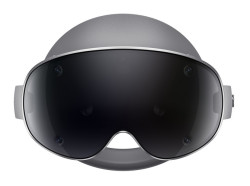
In this technical comparison between the Meta Quest 3S and the Samsung Galaxy XR, we analyze the key features to help you choose.
The display is a highlight, featuring a resolution of 1832 x 1920 pixels per eye for the Quest 3S versus 3,552 × 3,840 per eye (29 million total pixels) for the Galaxy XR.
Choosing between these two VR Headsets models often comes down to your budget, with prices around 300 USD and $1,799.99 USD (Controllers and Travel Case sold separately for $249.99 each).
| Specifications |
Meta Quest 3S |
Samsung Galaxy XR |
|---|---|---|

|
|
|
| Launch | ||
| Release Version | October, 2024 | October 2025 |
| Display | ||
| Sensor Technology | Single Fast-Switch LCD | Dual Micro-OLED panels |
| Image Resolution | 1832 x 1920 pixels per eye | 3,552 × 3,840 per eye (29 million total pixels) |
| Refresh rate | 90Hz, 120Hz | 60Hz, 72Hz (Default), up to 90Hz |
| Field of view | 96° Horizontal / 90° Vertical | 109° Horizontal / 100° Vertical |
| Brightness | - | High-peak brightness with 95% DCI-P3 color gamut |
| HDR | Not supported | Supports HDR10 and HLG video playback |
| Optics | ||
| Lens type | Fresnel | Even HAO 2.0 (Holistic Adaptive Optics) – specialized high-definition lenses |
| IPD adjustment | 3-position manual toggle (58mm, 63mm, 68mm) | Electronic/Mechanical adjustment (54mm – 70mm) |
| Eye relief | - | Supports separately purchasable Kodak prescription optical inserts |
| Tracking & Input | ||
| Tracking type | 6DoF Inside-out tracking via 4 IR cameras | 6-DOF Inside-out tracking |
| Controller tracking | Meta Quest Touch Plus (ringless design) | Supports dedicated Galaxy XR Controllers (sold separately) |
| Hand tracking | Yes | High-precision via 6 world-facing cameras |
| Eye tracking | No | Yes (4 interior cameras) |
| Facial tracking | No | Included; supports natural expressions for avatars |
| Performance | ||
| Processor / Chipset | Qualcomm Snapdragon XR2 Gen 2 | Qualcomm Snapdragon XR2+ Gen 2 |
| RAM | 8GB | 16GB |
| Storage | 128GB or 256GB | 256GB (No microSD expansion) |
| Mixed Reality Features | ||
| Passthrough | 4MP Full-color (18 PPD) | High-resolution Full-Color Passthrough via dual 6.5MP cameras |
| Depth sensing | No (uses dual IR floodlights for spatial awareness instead of a dedicated depth projector) | Built-in Depth Sensor and Flicker Sensor for environmental mapping |
| Audio | ||
| Built-in audio | Integrated stereo speakers with 3D spatial audio | Two 2-way speakers (Woofer + Tweeter) with Dolby Atmos |
| 3.5mm jack | No (requires USB-C adapter or Bluetooth) | No (supports USB-C and Bluetooth audio) |
| Mic | Integrated dual microphones | 6-microphone array with beamforming |
| Connectivity | ||
| Wired | USB-C | Proprietary power connector; USB-C (for data transfer only) |
| Wireless | Wi-Fi 6E | Wi-Fi 7 |
| Bluetooth | 5.2 | Bluetooth 5.4 |
| PCVR support | Supported via Quest Link, Air Link, and Steam Link | Supported via wireless streaming/link apps |
| Compatibility | ||
| Platforms | Meta Horizon OS | Android XR (Google Play Store ecosystem) |
| Supported OS | - | Android XR (powered by Google, optimized for Gemini AI) |
| Comfort | ||
| Weight | 514g | 545g (Headset) / 302g (External battery pack) |
| Strap type | Adjustable soft Y-strap (cloth) | Ergonomic side bands with forehead cushion to distribute pressure |
| Face interface | Standard foam interface | Fabric-based soft-touch interface; light shield included |
| Battery | ||
| Battery life | ~2.5 hours (average) | ~2 hours (General use) / 2.5 hours (Video playback) |
| Charging method | USB-C (18W to 20W supported) | USB-C (charging the external puck) |
| External battery support | Supported via Elite Strap with Battery or third-party power banks | Required (Tethered external battery design) |
| Misc | ||
| Inside the box | Headset, 2x Touch Plus Controllers, 2x AA Batteries, Power Adapter, Charging Cable, Glasses Spacer | Galaxy XR Headset, External Battery Pack, Forehead Cushion, Light Shield, Lens Cleaning Cloth, USB-C Cable & Power Adapter |
| Price | 300 USD | $1,799.99 USD (Controllers and Travel Case sold separately for $249.99 each) |
| Full Details | Quest 3S - Full Specifications | Galaxy XR - Full Specifications |