Compare Meta Quest 3 vs Samsung Galaxy XR
In this technical comparison between the Meta Quest 3 and the Samsung Galaxy XR, we analyze the key features to help you choose.
The display is a highlight, featuring a resolution of 2064 × 2208 per eye for the Quest 3 versus 3,552 × 3,840 per eye (29 million total pixels) for the Galaxy XR.
Choosing between these two VR Headsets models often comes down to your budget, with prices around 500 USD and $1,799.99 USD (Controllers and Travel Case sold separately for $249.99 each).
| Specifications |
Meta Quest 3 |
Samsung Galaxy XR |
|---|---|---|
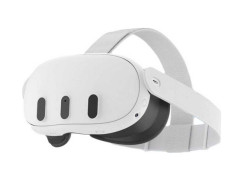
|
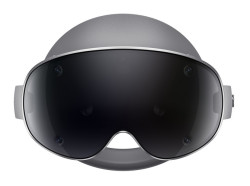
|
|
| Launch | ||
| Release Version | October, 2023 | October 2025 |
| Display | ||
| Sensor Technology | LCD (Infinite Display) | Dual Micro-OLED panels |
| Image Resolution | 2064 × 2208 per eye | 3,552 × 3,840 per eye (29 million total pixels) |
| Refresh rate | 90 Hz / 120 Hz supported | 60Hz, 72Hz (Default), up to 90Hz |
| Field of view | ~110° horizontal / ~96° vertical | 109° Horizontal / 100° Vertical |
| Brightness | - | High-peak brightness with 95% DCI-P3 color gamut |
| HDR | No | Supports HDR10 and HLG video playback |
| Optics | ||
| Lens type | Pancake lenses | Even HAO 2.0 (Holistic Adaptive Optics) – specialized high-definition lenses |
| IPD adjustment | Continuous 53–75 mm | Electronic/Mechanical adjustment (54mm – 70mm) |
| Eye relief | Yes (lens depth adjustment) | Supports separately purchasable Kodak prescription optical inserts |
| Tracking & Input | ||
| Tracking type | Inside-out (6 DoF) | 6-DOF Inside-out tracking |
| Controller tracking | Yes (IR + SLAM tracking) | Supports dedicated Galaxy XR Controllers (sold separately) |
| Hand tracking | Yes | High-precision via 6 world-facing cameras |
| Eye tracking | No | Yes (4 interior cameras) |
| Facial tracking | No | Included; supports natural expressions for avatars |
| Performance | ||
| Processor / Chipset | Qualcomm Snapdragon XR2 Gen 2 | Qualcomm Snapdragon XR2+ Gen 2 |
| RAM | 8 GB | 16GB |
| Storage | 128 GB / 512 GB | 256GB (No microSD expansion) |
| Mixed Reality Features | ||
| Passthrough | Full-color stereo passthrough | High-resolution Full-Color Passthrough via dual 6.5MP cameras |
| Depth sensing | Yes (depth sensor + scene understanding) | Built-in Depth Sensor and Flicker Sensor for environmental mapping |
| Audio | ||
| Built-in audio | Yes (spatial speakers) | Two 2-way speakers (Woofer + Tweeter) with Dolby Atmos |
| 3.5mm jack | Yes | No (supports USB-C and Bluetooth audio) |
| Mic | Yes (4-mic array) | 6-microphone array with beamforming |
| Connectivity | ||
| Wired | USB-C (Link mode) | Proprietary power connector; USB-C (for data transfer only) |
| Wireless | Wi-Fi 6E | Wi-Fi 7 |
| Bluetooth | Bluetooth 5.2 | Bluetooth 5.4 |
| PCVR support | Yes (Wired Link + Air Link + Virtual Desktop) | Supported via wireless streaming/link apps |
| Compatibility | ||
| Platforms | Standalone / PCVR | Android XR (Google Play Store ecosystem) |
| Supported OS | Meta OS (Android-based), Windows for PCVR | Android XR (powered by Google, optimized for Gemini AI) |
| Comfort | ||
| Weight | ~515 g (without strap) | 545g (Headset) / 302g (External battery pack) |
| Strap type | Soft strap (optional Elite strap) | Ergonomic side bands with forehead cushion to distribute pressure |
| Face interface | Replaceable facial interface | Fabric-based soft-touch interface; light shield included |
| Battery | ||
| Battery life | ~2–3 hours usage | ~2 hours (General use) / 2.5 hours (Video playback) |
| Charging method | USB-C charging / dock support (optional) | USB-C (charging the external puck) |
| External battery support | Yes (strap-mounted power pack) | Required (Tethered external battery design) |
| Misc | ||
| Inside the box | Headset + 2 Touch Plus controllers + cables | Galaxy XR Headset, External Battery Pack, Forehead Cushion, Light Shield, Lens Cleaning Cloth, USB-C Cable & Power Adapter |
| Price | 500 USD | $1,799.99 USD (Controllers and Travel Case sold separately for $249.99 each) |
| Full Details | Quest 3 - Full Specifications | Galaxy XR - Full Specifications |