Compare Huawei Mate X7 vs Samsung Galaxy Z TriFold
In this technical comparison between the Huawei Mate X7 and the Samsung Galaxy Z TriFold, we analyze the key features to help you choose.
The display is a highlight, featuring a resolution of 2416 x 2210 px (Main) | 2444 x 1080 px (Cover) for the Mate X7 versus 2160 x 1584 px (Main, 269 ppi) | 2520 x 1080 px (Cover, 422 ppi) for the Galaxy Z TriFold.
Choosing between these two Foldable Phones models often comes down to your budget, with prices around $2,099 (Global 16GB/512GB) and ~$2,899.
| Specifications |
Huawei Mate X7 |
Samsung Galaxy Z TriFold |
|---|---|---|
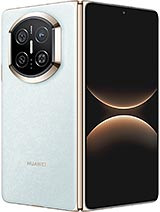
|
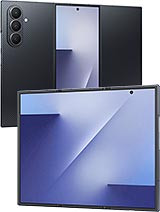
|
|
| Launch | ||
| Version | December 2025 | January 2026 |
| Network | ||
| Technology | GSM / CDMA / HSPA / LTE / 5G | GSM / HSPA / LTE / 5G |
| SIM | Dual Nano-SIM (Dual Stand-by) | Dual Nano-SIM + multi-eSIM support |
| Body | ||
| Dimensions | Folded: 156.8 x 73.8 x 9.5 mm | Unfolded: 156.8 x 144.2 x 4.5 mm | Folded: 159.2 x 75.0 x 12.9 mm | Unfolded: 159.2 x 214.1 x 3.9 mm |
| Weight | ~235g - 236g | 309g |
| Build materials | Aluminum frame, Vegan leather (Brocade) or Glass back, Basalt droplet hinge | Titanium Hinge Housing, Advanced Armor Aluminum Frame, Ceramic-Glass Fiber Reinforced Polymer back |
| Water/Dust rating | IP58 and IP59 (Resists high-pressure/high-temperature water jets) | IP48 (Water resistant up to 1.5m for 30 mins; limited dust resistance) |
| Miscellaneous | 4.5mm ultra-thin unfolded state; 3-Layer Composite Ultra-Tough Screen structure | Dual-hinge system (folds inward twice); total thickness when folded is 12.9mm |
| Display | ||
| Type | Foldable LTPO OLED, 1.07B colors (Main) | LTPO OLED (Cover) | Foldable Dynamic AMOLED 2X, 120Hz, HDR10+ |
| Size | 8.0-inch (Main) | 6.49-inch (Cover) | 10.0-inch (Main) | 6.5-inch (Cover) |
| Resolution | 2416 x 2210 px (Main) | 2444 x 1080 px (Cover) | 2160 x 1584 px (Main, 269 ppi) | 2520 x 1080 px (Cover, 422 ppi) |
| Refresh rate | 1-120Hz Adaptive (Both) | 1–120Hz Adaptive (Both) |
| HDR support | HDR Vivid / HDR10+ | HDR10+ / 100% DCI-P3 Color Volume |
| Protection | Kunlun Glass 2 (Cover) / UTG with Non-Newtonian fluid layer (Main) | Corning Gorilla Glass Ceramic 2 (Cover) |
| Display (Cover) | 3000 nits peak brightness; 1440Hz PWM dimming | 2600 nits peak brightness; 21:9 aspect ratio |
| Various | 2500 nits peak (Main); 300Hz touch sampling rate | 1600 nits peak (Main); S Pen support (specifically for TriFold) |
| Platform | ||
| OS | HarmonyOS 6.0 (China) / EMUI 15.0 (Global) | Android 16 with One UI 8 (7 years of OS and security updates) |
| Chipset | Kirin 9030 Pro (6nm) | Snapdragon 8 Elite for Galaxy (3 nm) |
| CPU | Nona-core (1x2.75 GHz, 4x2.27 GHz, 4x1.72 GHz) | Octa-core (2x4.47 GHz Oryon V2 + 6x3.53 GHz Oryon V2) |
| GPU | Maleoon 935 | Adreno 830 |
| Software Features | Two-way Satellite Calling/Messaging (BDS), AI Best Expression, Real-time voice translation | Galaxy AI (Gemini Live, Sketch to Image, Photo Assist), Samsung DeX (Wireless), Multi-desktop for 10" screen |
| Memory | ||
| Card slot | No (Internal only) | No |
| Internal storage | 256GB / 512GB / 1TB (UFS 4.0) | 512GB / 1TB (UFS 4.0) |
| RAM | 12GB / 16GB (Up to 20GB on Collector's Edition) | 16GB LPDDR5X |
| Main Camera | ||
| Wide (main) | 50 MP, f/1.4–f/4.0 (10-step variable aperture), 24mm, OIS, RYYB | 200 MP, f/1.7, 24mm, 1/1.3", OIS, Multi-directional PDAF |
| Ultra-wide | 40 MP, f/2.2, 13mm, 120˚, RYYB | 12 MP, f/2.2, 13mm, 120˚, Dual Pixel PDAF |
| Telephoto / periscope | 50 MP, f/2.2, 81mm, 3.5x optical zoom, OIS, RYYB | 10 MP, f/2.4, 67mm, OIS, 3x optical zoom (30x Space Zoom) |
| OIS | Yes (Wide and Telephoto) | Yes (Wide and Telephoto) |
| Video recording | 4K@30/60fps, 1080p@960fps (Super Slow-mo), AIS stabilization | 8K@30fps, 4K@30/60fps, 1080p@240fps (Slow-mo) |
| Selfie Camera | ||
| Inner selfie camera | 8 MP, f/2.2 | 10 MP, f/2.2, 24mm (Under-display tech) |
| Cover selfie camera | 8 MP, f/2.4 | 10 MP, f/2.2, 24mm |
| Selfie Camera features | HDR, Portrait, Rear-camera selfie mode via cover screen | HDR, 4K video support |
| Selfie Camera video | 4K@30fps | 4K@30/60fps |
| Sound | ||
| Loudspeaker | Yes, with stereo speakers | Yes, with stereo speakers |
| Stereo speakers | Yes (Huawei Histen) | Yes (tuned by AKG) |
| 3.5mm jack | No | No |
| Audio features | Two-way AI Noise Cancellation | 32-bit/384kHz audio, Dolby Atmos |
| Connectivity | ||
| WLAN | Wi-Fi 7, Dual-band, Wi-Fi Direct | Wi-Fi 7, Tri-band, Wi-Fi Direct |
| Positioning | GPS (L1+L5), GLONASS, BDS (B1I+B1c+B2a+B2b), GALILEO (E1+E5a+E5b), QZSS, NavIC | GPS, GLONASS, GALILEO, BDS, QZSS |
| NFC | Yes | Yes |
| Infrared | Yes | No |
| Radio | No | No |
| USB | USB Type-C 3.1, OTG, DisplayPort 1.2 | USB Type-C 3.2 Gen 1, OTG, DisplayPort support |
| Features | ||
| Sensors | Side-mounted Fingerprint, Gravity, Gyro, Barometer, Color Temperature, Infrared | Fingerprint (side-mounted), Accelerometer, Gyro, Proximity, Compass, Barometer |
| Fingerprint | Side-mounted | Side-mounted capacitive sensor |
| Stylus support | Yes | Yes (S Pen Fold Edition/Pro) |
| Ultra Wideband (UWB) | Yes | Yes |
| Special Features | Satellite Connectivity, SuperCool VC & Graphene Heat Dissipation | Circle to Search, Live Translate, Satellite Connectivity (SOS) |
| Battery | ||
| Battery type / capacity | 5,600mAh Silicon-Carbon | 5,600mAh (Three-cell system) |
| Wired charging | 66W Huawei SuperCharge | 45W Wired (50% in ~30 mins) |
| Wireless charging | 50W Huawei SuperCharge | 15W Wireless |
| Reverse charging | 5W Reverse wired | No (Wired) |
| Reverse wireless charging | 7.5W Reverse wireless | Yes (Wireless PowerShare, 4.5W) |
| Misc | ||
| Colors | Obsidian Black, Brocade White, Nebula Red, Phantom Purple, Cloud Blue | Crafted Black (Primary launch color) |
| Inside the box | 66W SuperCharger, USB-C Cable, Rotating Bracket Protective Case, Pre-applied film | Phone, 45W Adapter (select markets), USB-C Cable, SIM Ejector |
| Price | $2,099 (Global 16GB/512GB) | ~$2,899 |
| Full Details | Mate X7 - Full Specifications | Galaxy Z TriFold - Full Specifications |